54% of event organizers worldwide already use AI tools, and 67% plan to expand that usage this year. A global Bizzabo report points to an even stronger figure: 95% of event teams expect to increase their AI usage in 2026. Adoption is no longer a question of "if" — it's a question of "how".
But there's a meaningful gap between adopting AI and transforming the experience with AI. Most teams today use it for basic tasks: drafting emails, transcribing meetings, generating program outlines. That's already valuable, but it's the tip of the iceberg.
The real leap is somewhere else. It's in designing the event from AI, not in bolting AI on afterwards.
Three axes where AI changes an event
Specialized MICE event consultancies agree that the strong impact concentrates on three axes.
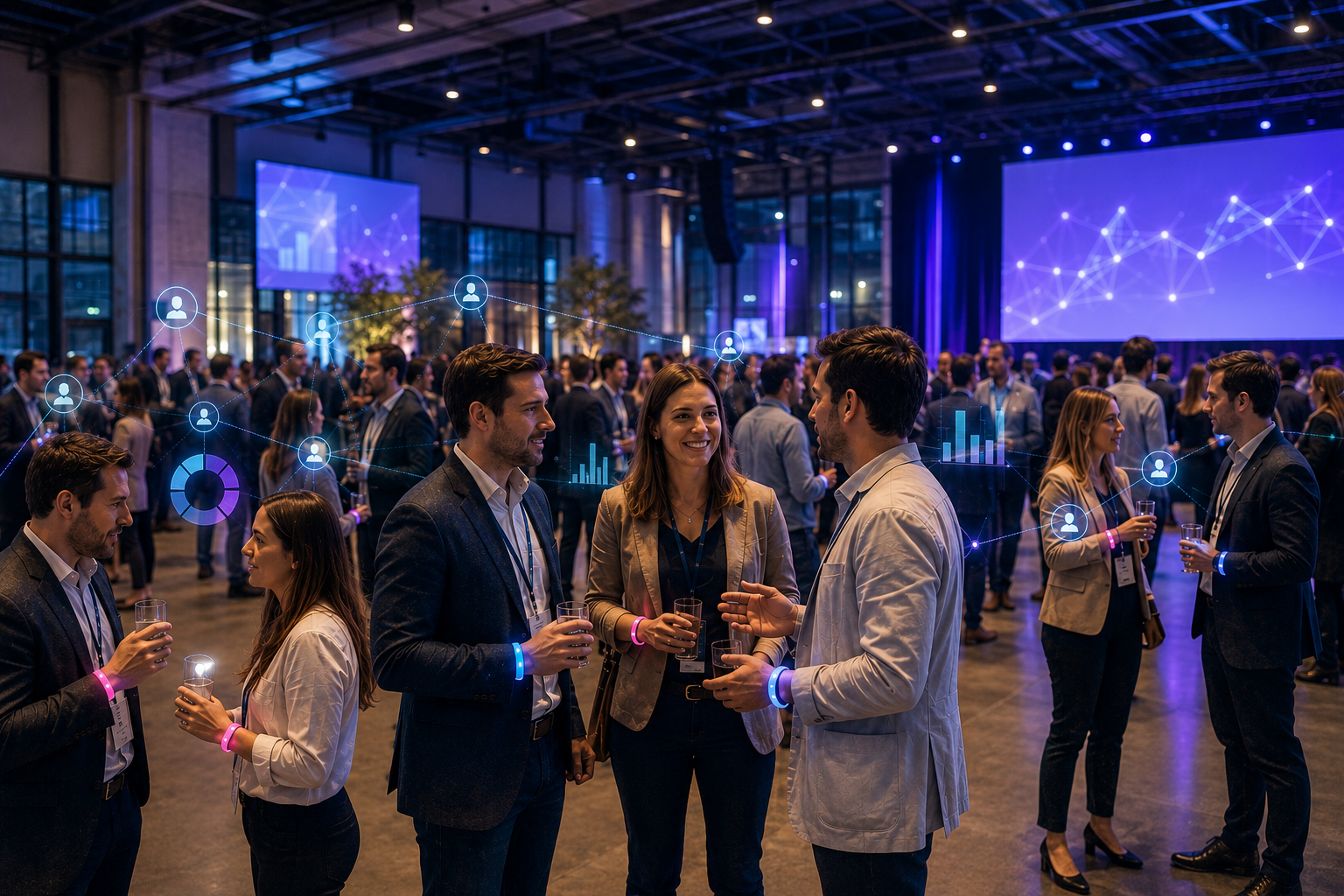
The first is experience personalization. AI lets every moment — from registration to closing — be tailored to the individual guest. Personalized itineraries, session recommendations, suggestions of people to connect with based on professional affinity, stated objectives, or business complementarity. Instead of one event for everyone, every guest lives their own. "Smart networking" systems like the ones described by Cvent and EventScase already analyze profiles to propose high-value connections — something that historically was left to luck or charisma.
The second is operational automation. Agenda building, table assignments, guest segmentation, contextualized reminder delivery, answering frequent questions — all of it can be automated with well-designed AI assistants. What used to take weeks of team time runs in minutes, freeing the organizing team to focus on what's creative and what's critical. Industry studies note that these operational savings are the easiest to measure, and therefore the first companies implement.
The third is live data analytics. Reports that show how the event is moving while it's happening: which activations work, which groups are most engaged, which moments drive the most interaction. This changes the way decisions are made during the event itself. It's the difference between reviewing metrics on Monday and being able to react to what's happening right now.
What an AI-designed event feels like
To understand it concretely, it helps to imagine the experience from the guest's perspective.
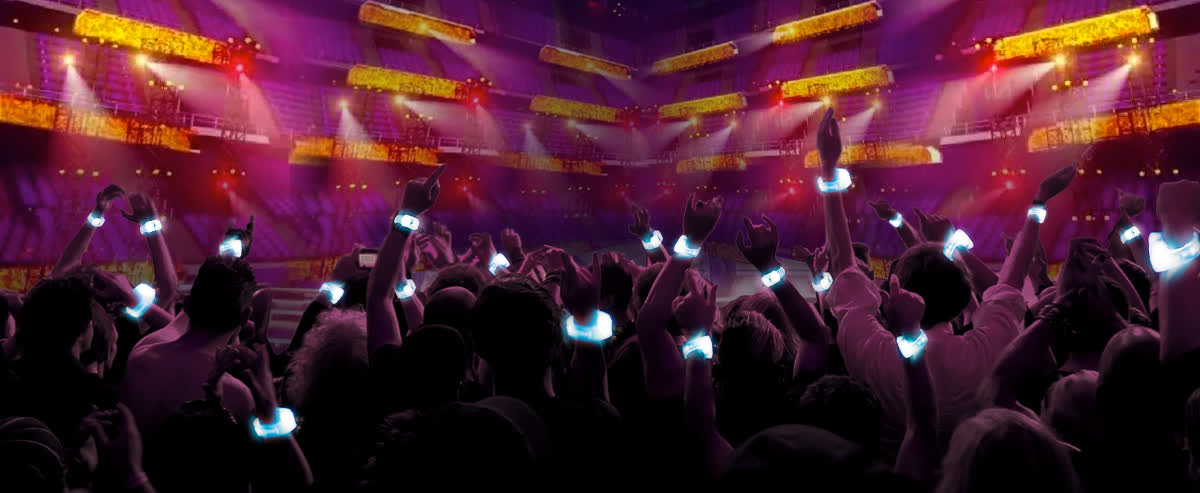
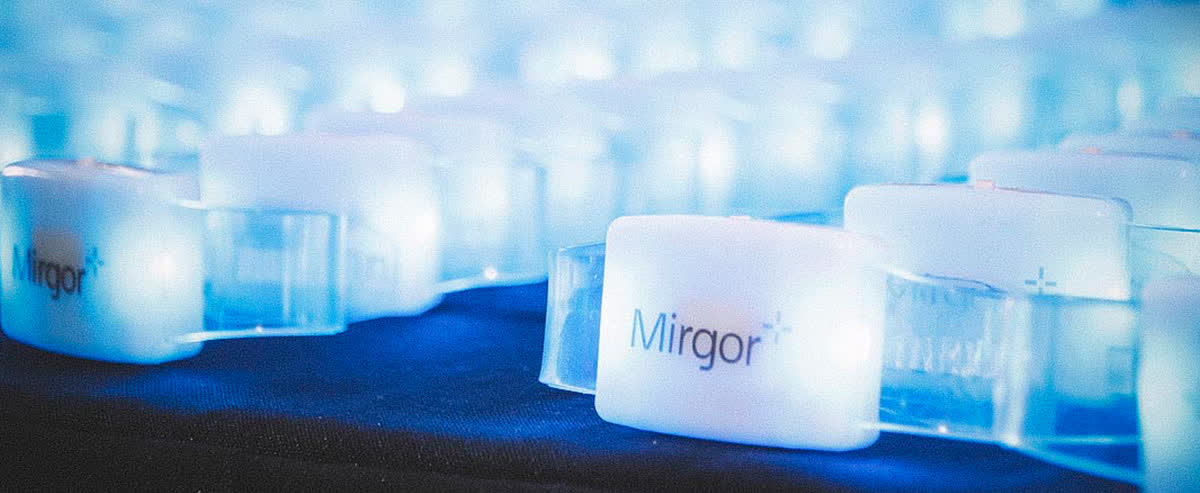
You arrive at the venue. Before you cross the door, a smart NFC-chip bracelet identifies you: its LED light turns on with a personalized color and an AI hologram greets you by name and shows you to your table. No paper lists, no people with clipboards looking for you. This, which until a few years ago felt like science fiction, is today an operational reality we execute in over 150 events across Latin America and the United States.
Once inside, the event app suggests who to approach: people with similar projects to yours, problems you're solving in parallel, or clear complementarity with your role. It's not forced networking; it's a curated recommendation by a system that cross-referenced your profile with hundreds of others.
Throughout the night, photo totems process images with AI in the moment: you take a photo and come back with your face in an impossible scenery, on a cinematic poster, or in an animated scene generated live.
When it ends, you receive on your phone an AI-generated personalized video: your own images from the event, messages from colleagues, key moments. Impossible to make manually for 500 people; trivial when there's AI behind it.
The difference between "using AI" and "designing with AI"
Most companies that say "we're using AI in our events" mean that ChatGPT helped them with the MC's script or that some tool suggested the guest list. It's useful, but it doesn't change the attendee experience.
The real shift happens when AI is embedded in the event itself: when the hologram recognizes whoever walks in and addresses them by name, when the app suggests which table to sit at based on affinities, when team-building groups are formed by algorithm rather than improvisation, when every guest leaves with a video that couldn't exist without them.
The teams that are seeing real results with AI in events share a pattern: they're clear on the outcomes they want to improve, they identify exactly which tasks AI can support, and they measure impact from the start. They don't use AI as a fad; they use it because they designed from it.
And that's the leap worth planning for.
How we apply this at WonderLab
Everything we walked through in this post is the approach we've been developing in FiestÓN.iA, our corporate event format with embedded AI. It combines an exclusive app with an AI advisor, NFC LED bracelets, a welcome hologram, IA Match for networking, AI-generated personalized videos and live reporting for the organizing team. It's the operational translation of the three axes mentioned above — personalization, automation and analytics — in a single format. We've produced over 150 events with this system across Latin America and the United States.
If you'd like to explore this format for your next event, let's talk.